TUTORIAL: RheoGraphics
Objective of RheoGraphics: Graphics is the preferred tool for exploring a material and for communicating your findings. The ideal “language” for rheology. Right from the very beginning, convert your your experimental data or your rheological model into stunning, publication-quality graphs, and proceed from there. This can be initiated by IRIS within minutes and followed through using icon support (see tutorial)
Personalize Your Rheological Images: IRIS lets you develop a personal graphics style, and we encourage you to do that. Your “trademark” so to speak. With your rheological image on the screen, go to Tools → Program Options. There you can modify the overall graph appearance, including graph size, shape, font, font size, tick direction, and other general settings.
Further editing of a figure (directly adding text and/or symbols and lines): Open that specific figure on the IRIS screen, right-click directly on the graph wherever you want to make an adjustment. Additional graphing and formatting options can be found in the Help section.
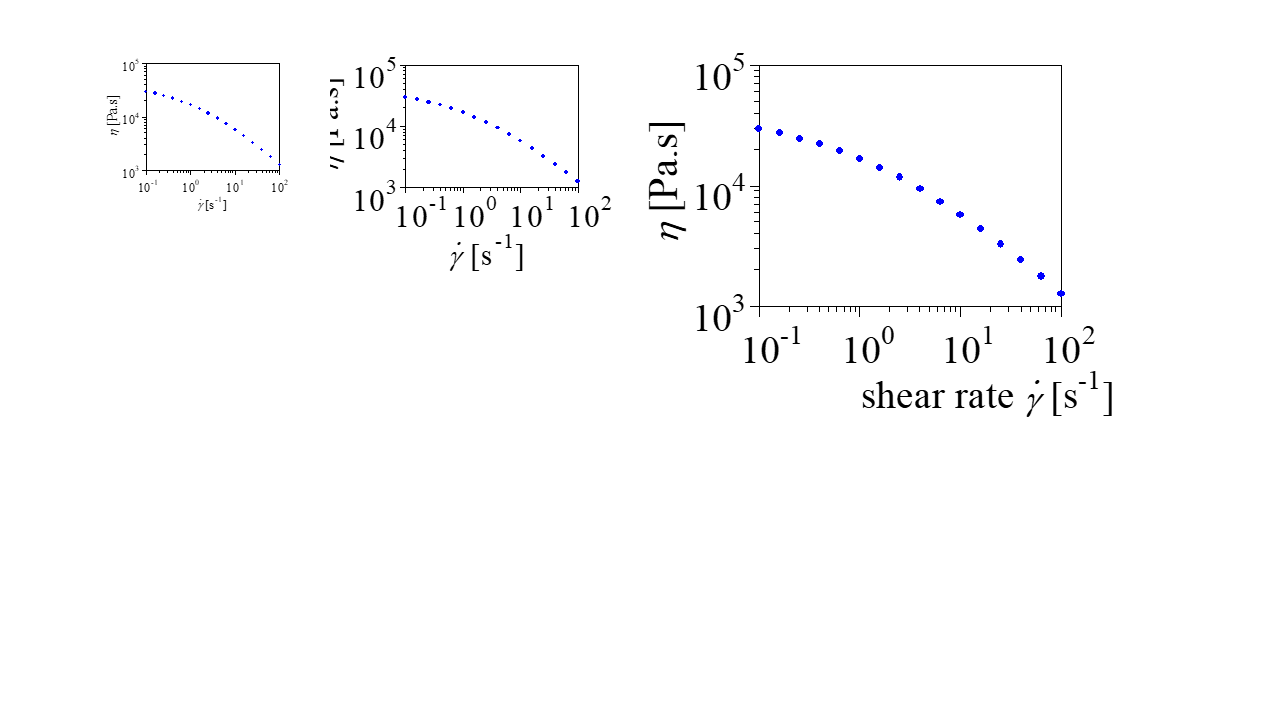
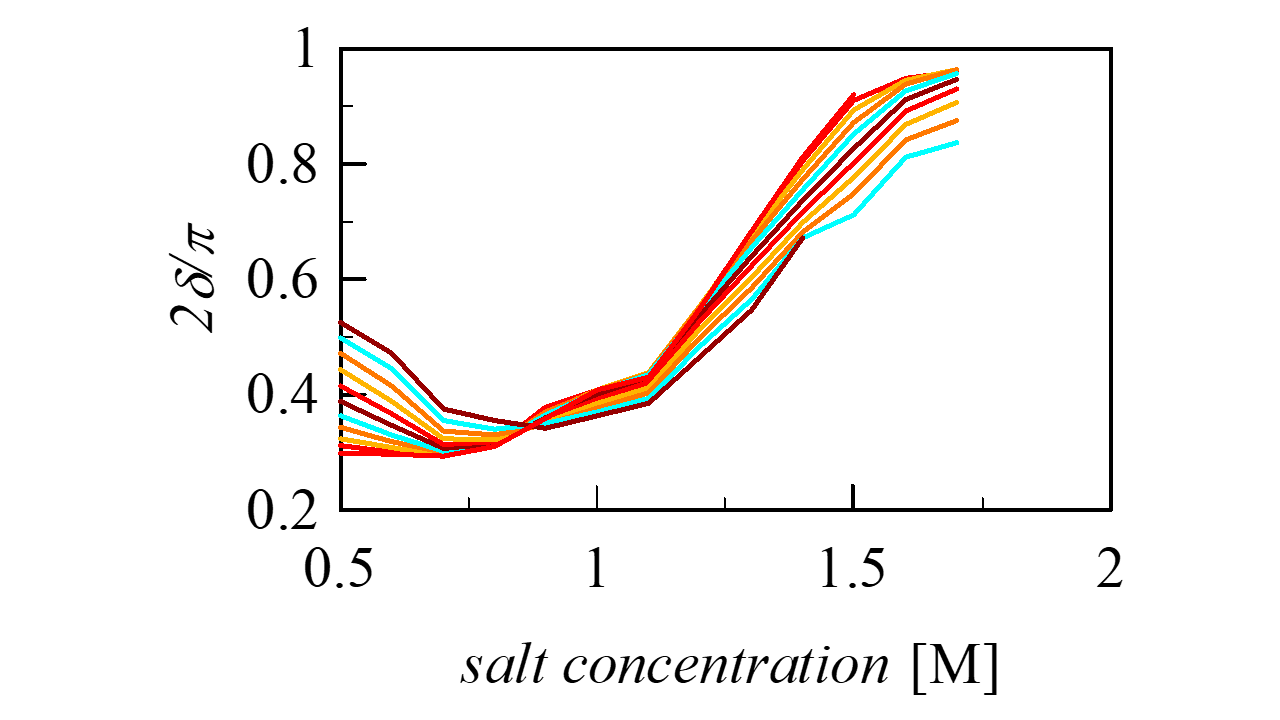
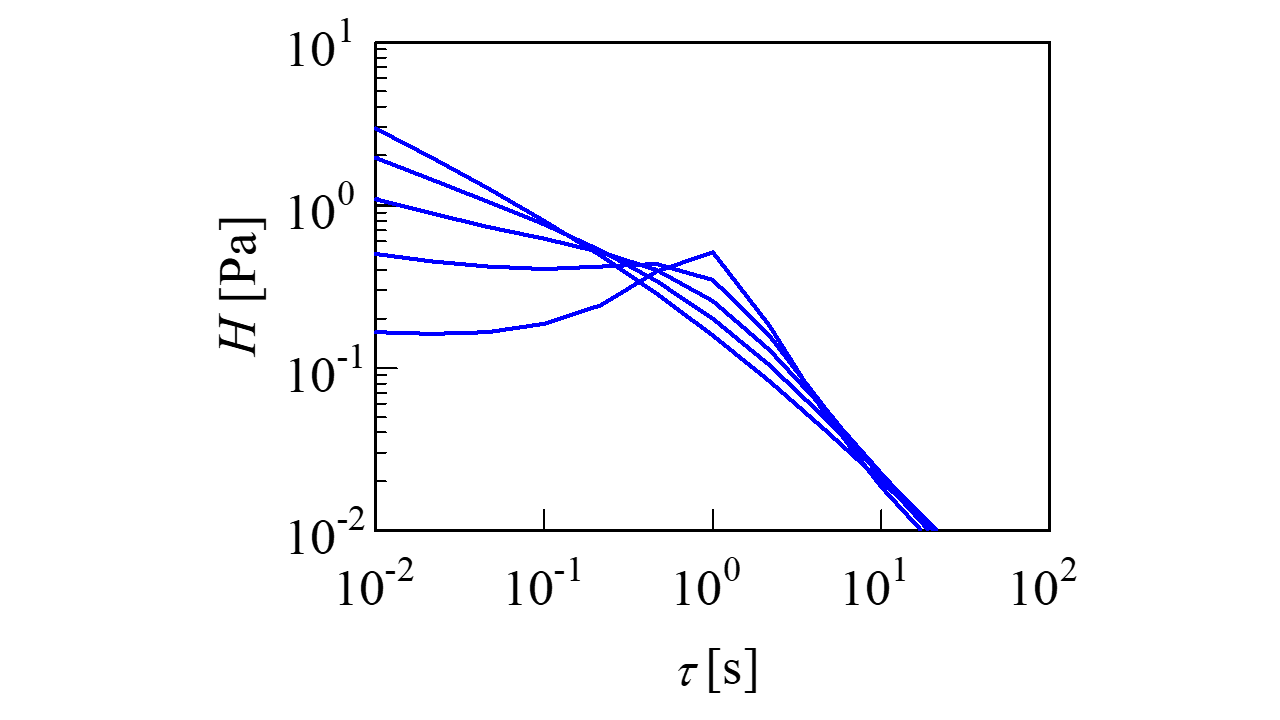
Figures: selected plotting choices
· Left – assigning font, size, and label text
· Middle –color variation for “rainbow plot” of coacervate salt addition [1]
· Right - parameter variation for fractional Maxwell model alpha=0.9 and beta=0.1 to 0.4 [2]
Aside
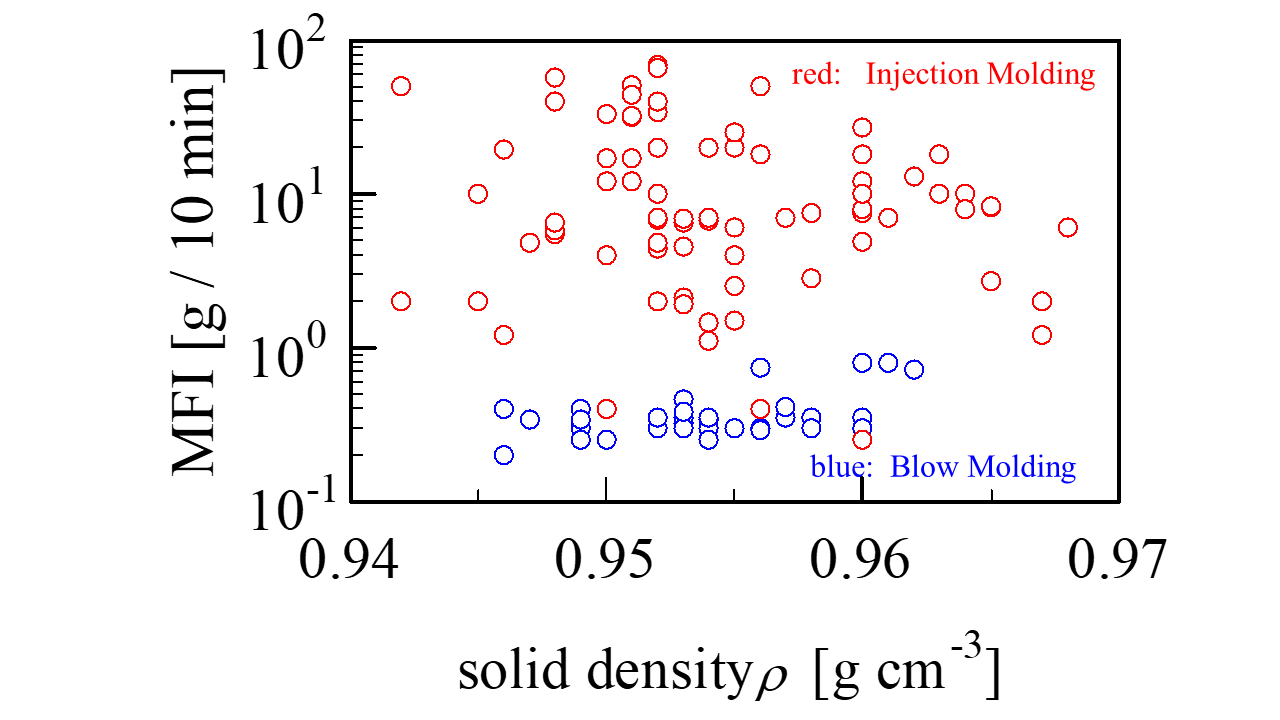
IRIS basically is a general graphics software which often has been used for creating non-rheology plots. In this way, the personal trademark appearance is carried over and provides a unifying appearance, in publications for instance.
Figure: Example of a NON-rheology graph made with IRIS. Sorting of commercial HDPE polymers [3]
References
[1] Liu Y, Momani B, Winter HH, Perry SL* (2017) Rheological characterization of liquid-to-solid transitions in bulk polyelectrolyte complexes. ACS Macro Letters
[2] Schmidt RF, Winter HH, Gradzielski M (2024) Generalized vs. fractional: a comparative analysis of Maxwell models applied to entangled polymer solutions. Soft Matter 20:7914-7925
[3] Tillinghast G, Winter HH, Rothstein JP (2024) Recovery of postconsumer mechanically recycled polymers. J Rheology 69:789–806